Visual Search in Ecommerce: How to Optimize Product Images

A customer sees a kurta they love on Instagram. They take a screenshot, upload it to Google Lens, and within seconds they're browsing similar styles from Indian D2C brands!
This is visual search in ecommerce, and it's changing how customers discover products in 2026. Text-based search like "blue cotton kurta" is gradually giving way to image-based search: "find me this exact style".
Google reports that visual search queries have grown 300% in India over the past two years, with fashion, home decor, and accessories leading the category.
If your product images aren't optimized for visual search ecommerce, your products may never appear in this growing discovery channel. Most sellers still rely only on basic white-background product shots and struggle to convert traffic into sales.
The brands winning? They're using AI generated product photography to create lifestyle images, optimized backgrounds, and visual search SEO that actually gets discovered.
This is visual search in ecommerce, and it's changing how customers discover products in 2026. Text-based search like "blue cotton kurta" is gradually giving way to image-based search: "find me this exact style".
Google reports that visual search queries have grown 300% in India over the past two years, with fashion, home decor, and accessories leading the category.
If your product images aren't optimized for visual search ecommerce, your products may never appear in this growing discovery channel. Most sellers still rely only on basic white-background product shots and struggle to convert traffic into sales.
The brands winning? They're using AI generated product photography to create lifestyle images, optimized backgrounds, and visual search SEO that actually gets discovered.
Why Visual Search Changes Everything for Ecommerce
Visual search in ecommerce solves a fundamental problem: customers often can't describe what they want in words, but they know it when they see it.
How visual search works:
Customer uploads a photo (screenshot, social media inspiration, real-world image). AI analyzes visual elements like color, pattern, and style, then matches against indexed product images to show visually similar products from ecommerce sites.
Why this matters for Indian D2C:
This matters especially for fashion and home decor where visual discovery beats text search. A customer searching for 'blue anarkali with golden embroidery' gets 10,000 generic results. Visual search with the exact screenshot? 10 relevant matches that look like what they want.
This shift means ecommerce image SEO is no longer optional. It's the difference between being discovered or being invisible.
How visual search works:
Customer uploads a photo (screenshot, social media inspiration, real-world image). AI analyzes visual elements like color, pattern, and style, then matches against indexed product images to show visually similar products from ecommerce sites.
Why this matters for Indian D2C:
This matters especially for fashion and home decor where visual discovery beats text search. A customer searching for 'blue anarkali with golden embroidery' gets 10,000 generic results. Visual search with the exact screenshot? 10 relevant matches that look like what they want.
This shift means ecommerce image SEO is no longer optional. It's the difference between being discovered or being invisible.
Case Study: Anjali's Accessories – Scaling With AI-Generated Product Images
Anjali's Accessories, a jewelry and accessories brand on Amazon Smart Commerce, faced a challenge most D2C sellers know well: product photography is expensive, time-consuming, and hard to scale.
Hiring models, renting studios, and coordinating photoshoots for every new SKU wasn't sustainable. But basic white-background images weren't converting. Customers couldn't visualize how pieces looked worn or styled.
The solution: AI generated product photography through Amazon Smart Commerce's Catalog Agent.
What they did:
• Uploaded simple product photos and used Catalog Agent's AI to generate lifestyle images with model photoshoots
• Created multiple background variations meeting visual search SEO standards
The results:
• Product pages went from 1 basic image to 5-7 lifestyle images per SKU
• Visual search traffic increased and time to launch new SKUs dropped from days to hours
The key insight: You don't need expensive photoshoots to create professional, discoverable images. AI tools can transform basic product shots into optimized visuals that perform in both visual search ecommerce and traditional browsing.
Hiring models, renting studios, and coordinating photoshoots for every new SKU wasn't sustainable. But basic white-background images weren't converting. Customers couldn't visualize how pieces looked worn or styled.
The solution: AI generated product photography through Amazon Smart Commerce's Catalog Agent.
What they did:
• Uploaded simple product photos and used Catalog Agent's AI to generate lifestyle images with model photoshoots
• Created multiple background variations meeting visual search SEO standards
The results:
• Product pages went from 1 basic image to 5-7 lifestyle images per SKU
• Visual search traffic increased and time to launch new SKUs dropped from days to hours
The key insight: You don't need expensive photoshoots to create professional, discoverable images. AI tools can transform basic product shots into optimized visuals that perform in both visual search ecommerce and traditional browsing.
Image SEO Fundamentals: How to Get Found Through Visual Search
If you're going to invest in better product images, make sure search engines can actually find them. Here's the image SEO checklist:
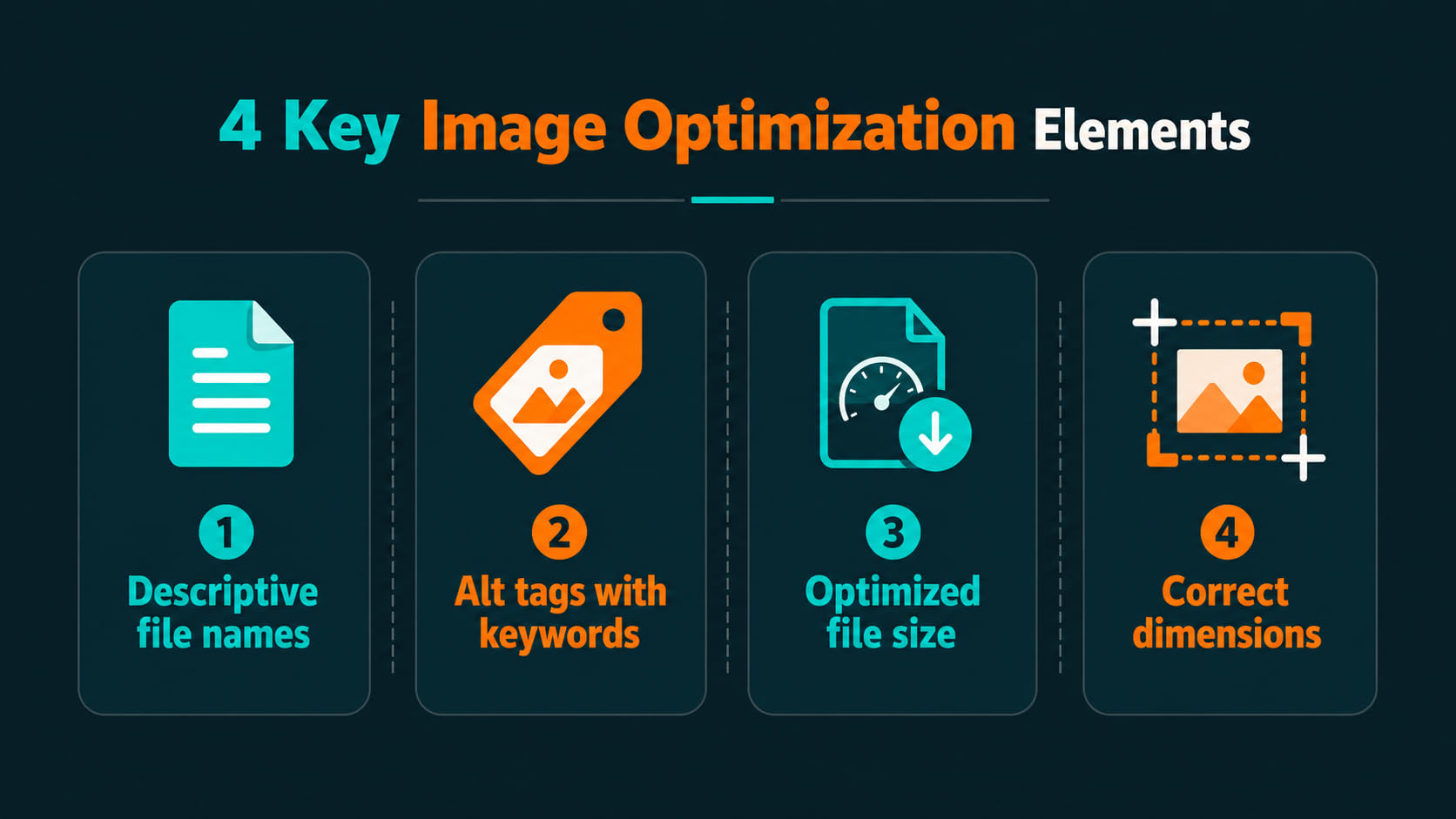
- File Names That Describe the Product
• Bad: IMG_1234.jpg, DSC_5678.jpg
• Good: blue-cotton-anarkali-kurti-block-print.jpg
Why it matters: Search engines use file names to better understand image content before fully analyzing visuals. Descriptive file names improve visual search SEO. - Alt Tags and SEO – Non-Negotiable
Alt tags help search engines understand your visuals, improving visibility in both traditional and visual search results.
• Bad alt tag: "Product image"
• Good alt tag: "Blue cotton anarkali kurti with white block print, knee-length, free size"
Alt tag formula:
• Primary keyword (product type)
• Key visual features (color, pattern, style)
• Important details (size, material, occasion)
Alt tags and SEO work together to rank your images in visual search results. Skip this, and even perfect photos won't get discovered. - Image File Size and Load Speed
Visual search users are mobile-first (80%+ in India). Slow-loading images kill conversion and hurt search engine marketing rankings.
Target file sizes:
• Main product image: 100-150KB max
• Lifestyle images: 150-200KB max
• Banner images: 200-300KB max
Use tools like TinyPNG to auto-compression to reduce file size without losing quality. - Image Dimensions and Aspect Ratios
Different platforms prioritize different dimensions:
Google Visual Search: 1:1 (square) or 4:5 (portrait) perform best
Instagram Shopping: 1:1 (square) mandatory
Pinterest Visual Search: 2:3 (tall portrait) gets maximum visibility
Website product pages: 1:1 primary, 4:5 lifestyle shots
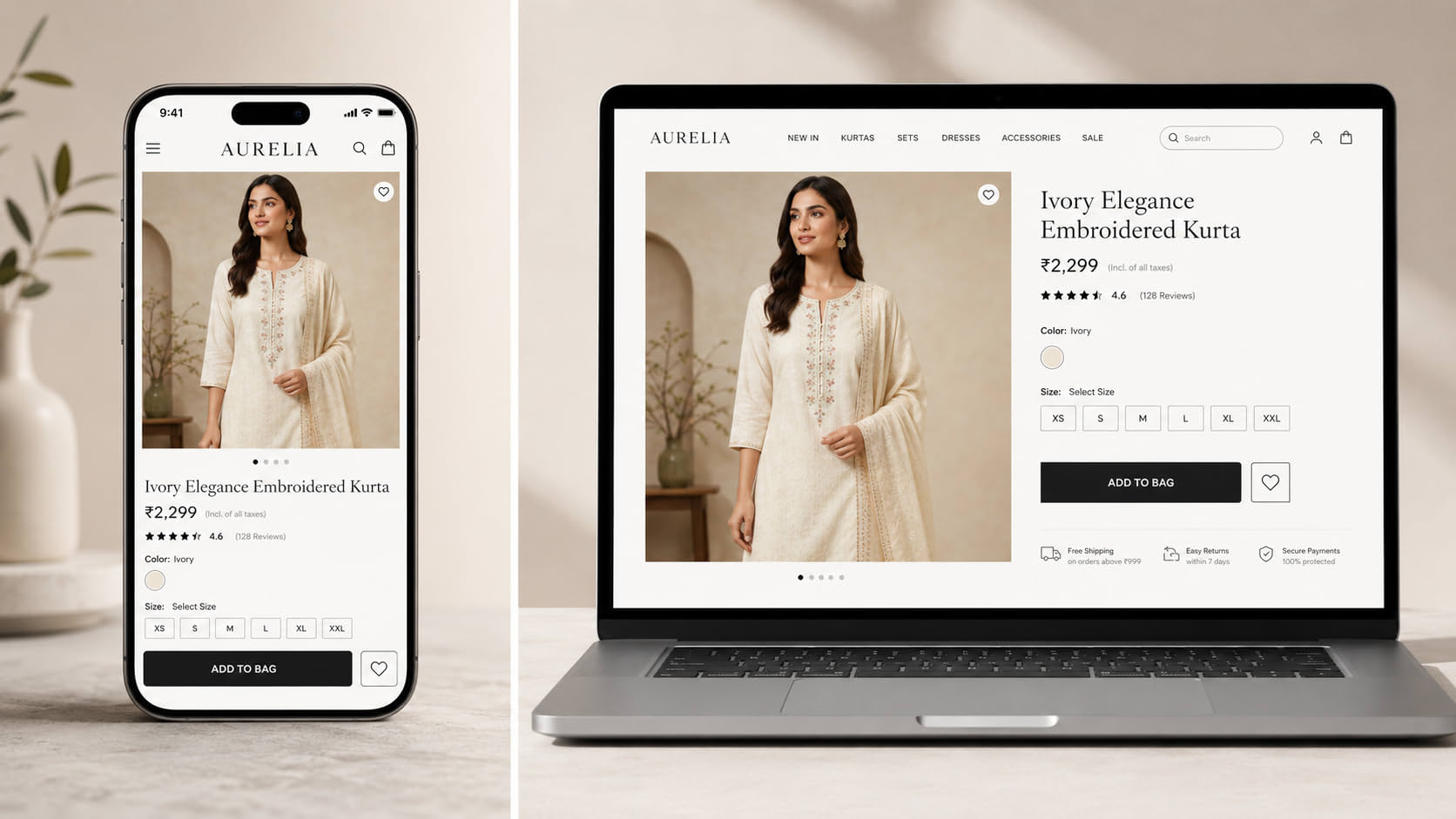
Amazon Smart Commerce's themes are optimized for mobile-first aspect ratios, ensuring images display correctly across devices.
AI Product Image Optimization: Transform Basic Shots Into Lifestyle Visuals
This is where AI generated product photography changes the game. You don't need a ₹50,000 photoshoot to create professional images anymore.
Example: Background Transformation
Before: Handmade brass diya on plain white background
After (AI-generated): Same diya on wooden table with soft Diwali decor in background, warm lighting, festive ambiance
How to do this:
Example: Background Transformation
Before: Handmade brass diya on plain white background
After (AI-generated): Same diya on wooden table with soft Diwali decor in background, warm lighting, festive ambiance
How to do this:
1. Use Amazon Smart Commerce's Catalog Agent:
• Upload basic product photo
• AI automatically generates lifestyle backgrounds based on product category
• Home decor gets styled room settings
• Jewelry gets model photoshoots
• Clothing gets fashion lookbook backgrounds
• Upload basic product photo
• AI automatically generates lifestyle backgrounds based on product category
• Home decor gets styled room settings
• Jewelry gets model photoshoots
• Clothing gets fashion lookbook backgrounds
2. AI Image Tools (For Additional Variations):
• Remove.bg: Strip existing backgrounds
• Canva AI: Add custom backgrounds, adjust lighting
• Midjourney/DALL-E: Generate completely new lifestyle scenes
• Remove.bg: Strip existing backgrounds
• Canva AI: Add custom backgrounds, adjust lighting
• Midjourney/DALL-E: Generate completely new lifestyle scenes
3. Maintain Brand Consistency:
• Use similar color palettes across images
• Keep lighting style consistent
• Match backgrounds to brand aesthetic (minimalist, maximalist, earthy, modern)
• Use similar color palettes across images
• Keep lighting style consistent
• Match backgrounds to brand aesthetic (minimalist, maximalist, earthy, modern)
AI-Generated Images + SEO = Discovery Engine
The magic happens when you combine AI product image optimization with proper seo image optimization:
Step 1: Generate lifestyle image with AI, name file descriptively
Step 2: Add detailed alt tags and compress under 150KB
Step 3: Upload and verify mobile display
Now your image is discoverable through text search ("brass diya"), visual search (customer uploads similar image), and optimized for conversion (lifestyle setting helps visualization).
Step 1: Generate lifestyle image with AI, name file descriptively
Step 2: Add detailed alt tags and compress under 150KB
Step 3: Upload and verify mobile display
Now your image is discoverable through text search ("brass diya"), visual search (customer uploads similar image), and optimized for conversion (lifestyle setting helps visualization).
Website Banners: The Overlooked Visual Search Opportunity
Product images aren't the only visuals that matter. Website banners drive first impressions and SEO rankings too.
Hero banners (homepage top section) should use high-quality lifestyle imagery that reflects your brand aesthetic. Optimize for mobile with vertical or square crops, compress under 300KB, and use SEO-friendly file names like "brand-name-spring-collection-banner.jpg" with descriptive alt tags.
Category banners work best when they show products in real-life usage or styled settings. Include text overlays with offers or CTAs, optimize alt tags and file names per category, and enable lazy loading for below-fold banners to improve page speed.
Promotional banners drive urgency for time-sensitive campaigns. Update alt tags when offers change, and archive old banners instead of deleting them to preserve URL value.
AI Product Image Optimization: Transform Basic Shots Into Lifestyle Visuals
Here's the step-by-step process to optimize your entire ecommerce image SEO strategy:
For new products:
• Take basic product photo (white background, well-lit) and use AI tools to generate 3-5 lifestyle variations
• Name files descriptively and write detailed alt tags before upload
• Compress to target file size (under 150KB) and verify mobile display
For existing catalog:
• Audit current images for file names, alt tags, and file sizes - prioritize top 20 revenue-generating SKUs
• Add AI-generated lifestyle images to basic product shots and update file names and alt tags
• Re-upload optimized versions and monitor visual search traffic in analytics
For website banners:
• Design in correct dimensions (1920x600 desktop, 800x800 mobile) and compress under 300KB
• Add descriptive alt tags and SEO-friendly file names
• Update seasonally to maintain fresh visual content
For new products:
• Take basic product photo (white background, well-lit) and use AI tools to generate 3-5 lifestyle variations
• Name files descriptively and write detailed alt tags before upload
• Compress to target file size (under 150KB) and verify mobile display
For existing catalog:
• Audit current images for file names, alt tags, and file sizes - prioritize top 20 revenue-generating SKUs
• Add AI-generated lifestyle images to basic product shots and update file names and alt tags
• Re-upload optimized versions and monitor visual search traffic in analytics
For website banners:
• Design in correct dimensions (1920x600 desktop, 800x800 mobile) and compress under 300KB
• Add descriptive alt tags and SEO-friendly file names
• Update seasonally to maintain fresh visual content
Visual Search isn't the Future, it's Now!
Visual search ecommerce is already here. Google Lens processes billions of visual searches monthly, with India as one of the fastest-growing markets. Pinterest Lens, Instagram Shopping, and Amazon's own visual search all prioritize well-optimized images.
The brands getting discovered aren't the ones with the most products. They're the ones with the best image SEO and AI generated product photography that meets visual search standards.
Start with your top 20 SKUs:
• Add AI-generated lifestyle images with optimized file names and alt tags
• Compress for mobile-first loading (under 150KB)
• Track visual search traffic in analytics
Remember: customers are already searching for your products visually. The question is whether they're finding you or your competitors.
The brands getting discovered aren't the ones with the most products. They're the ones with the best image SEO and AI generated product photography that meets visual search standards.
Start with your top 20 SKUs:
• Add AI-generated lifestyle images with optimized file names and alt tags
• Compress for mobile-first loading (under 150KB)
• Track visual search traffic in analytics
Remember: customers are already searching for your products visually. The question is whether they're finding you or your competitors.
COMPANY


Built in

© 2026 Amazon.com, Inc. or its affiliates. All rights reserved